
Why Artificial Tears Aren't Always Enough
Blog:Why Artificial Tears Aren't Always Enough
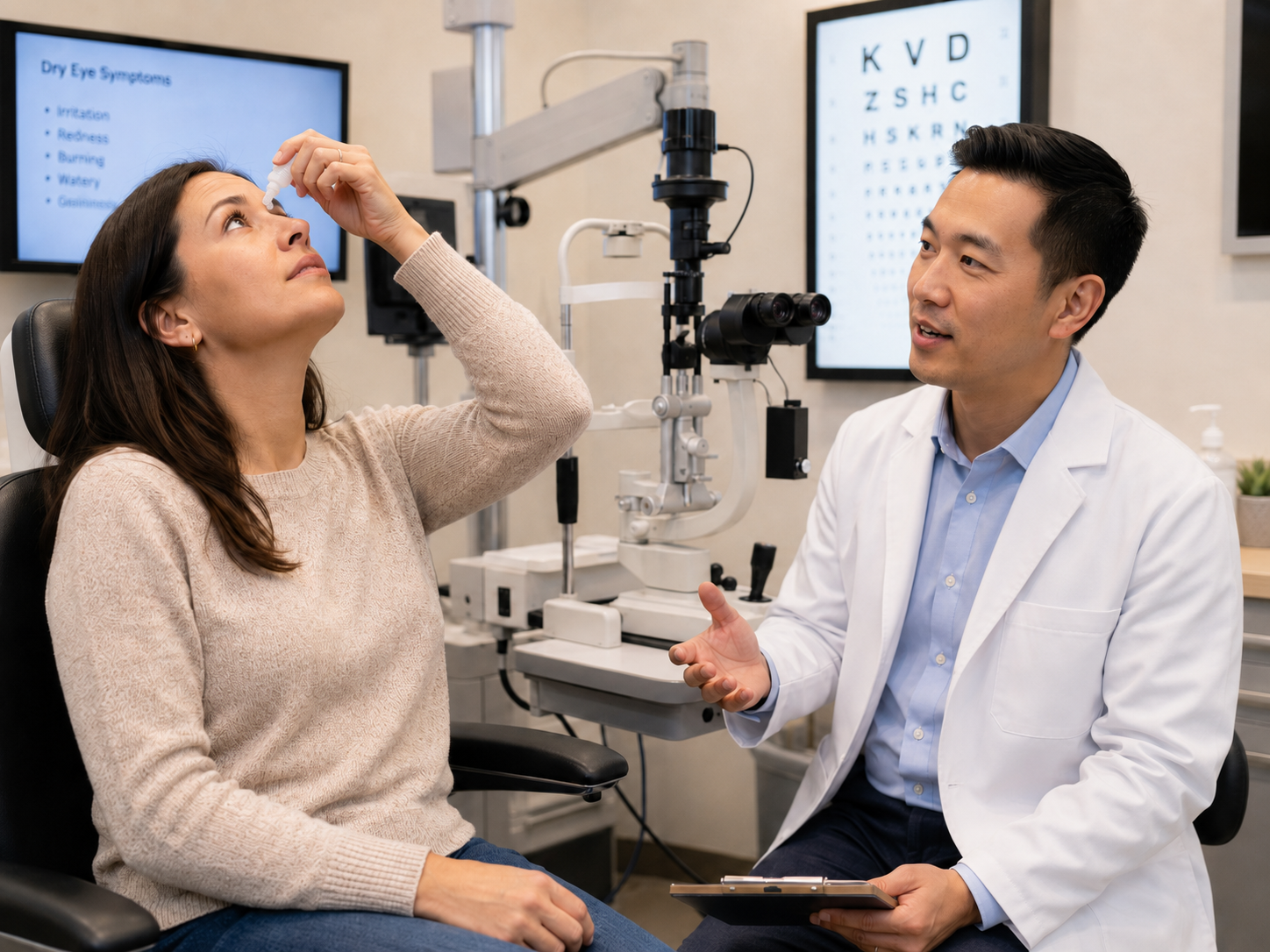
If your eyes often feel dry, gritty, or irritated, you've probably reached for a bottle of artificial tears. They're easy to find, don't require a prescription, and can provide quick relief.
But what happens when the drops stop helping?
Many people assume they simply need to use artificial tears more often or try a different brand. In reality, persistent dry eye symptoms often point to an underlying problem that lubricating drops alone cannot solve.
Artificial tears are an important part of dry eye care, but they are not a cure for every type of dry eye disease. Understanding why can help you know when it's time to seek a professional evaluation.
What Artificial Tears Actually Do
Artificial tears are designed to supplement your natural tears by adding moisture to the surface of the eye. They can temporarily reduce symptoms such as:
Dryness
Burning
Mild irritation
Grittiness
Temporary blurry vision that improves after blinking
For many people with occasional dryness caused by environmental factors, prolonged screen use, or air conditioning, artificial tears may provide enough relief.
The challenge is that dry eye is often more complicated than simply "not having enough tears."
Dry Eye Has More Than One Cause
One of the biggest misconceptions about dry eye is that everyone has the same condition.
In reality, dry eye is a group of disorders with different underlying causes. Two people may describe identical symptoms but require very different treatment plans.
Possible causes include:
Poor tear production
Rapid tear evaporation
Inflammation of the eye's surface
Meibomian gland dysfunction (blocked oil glands in the eyelids)
Blepharitis (eyelid inflammation)
Contact lens wear
Certain medications
Hormonal changes
Autoimmune diseases such as Sjögren's disease
A comprehensive eye examination is needed to determine which factors are contributing to your symptoms.
The Missing Ingredient: Healthy Tear Film
Your tears are made up of three important components:
An oily layer that slows evaporation
A watery layer that hydrates the eye
A mucus layer that helps tears spread evenly
If any part of this system isn't working properly, your eyes can become dry.
For example, many people produce enough watery tears but don't produce enough healthy oil from the meibomian glands. Without that protective oil layer, tears evaporate too quickly.
Adding more artificial tears may briefly improve comfort, but the underlying problem remains.
When Artificial Tears Stop Helping
It's common for people to say, "The drops work—but only for a few minutes."
That can be an important clue.
Persistent symptoms despite frequent use of lubricating drops may suggest that additional evaluation is needed, especially if you notice:
Symptoms returning quickly
Burning that becomes more frequent
Fluctuating blurry vision
Redness that keeps coming back
Discomfort while reading or using a computer
Difficulty wearing contact lenses
These symptoms do not necessarily indicate a serious eye disease, but they do deserve a closer look.
Not All Artificial Tears Are the Same
Walk into any pharmacy, and you'll find dozens of different eye drops.
Some are designed for:
Mild dryness
Moderate to severe dry eye
Lipid-based tear deficiency
Preservative-free use
Frequent daily application
Choosing the wrong product may leave you disappointed even if you're using the drops exactly as directed.
In addition, some redness-relieving eye drops are not intended to treat dry eye and should not be confused with lubricating artificial tears.
An eye care professional can recommend products that match your specific type of dry eye.
Dry Eye Treatment Often Involves More Than Eye Drops
Treatment depends on the underlying diagnosis.
Depending on your examination findings, your optometrist may recommend one or more approaches, including:
Preservative-free artificial tears
Warm compresses
Eyelid hygiene
Managing meibomian gland dysfunction
Environmental modifications
Prescription medications when appropriate
Nutritional recommendations based on your overall health
Follow-up monitoring to assess your response
Because dry eye has many causes, treatment is rarely one-size-fits-all.
Everyday Habits Can Make Symptoms Worse
Sometimes lifestyle factors play a bigger role than people realize.
Dry eye symptoms may worsen with:
Long hours on digital devices
Reduced blinking during screen use
Air conditioning or fans blowing toward the face
Dry climates
Cigarette smoke
Wearing contact lenses for extended periods
Simple adjustments—such as taking regular screen breaks, consciously blinking more often, and avoiding direct airflow toward your eyes—may complement your treatment plan.
When Should You Schedule an Eye Exam?
Occasional dryness isn't unusual.
However, it's a good idea to schedule a prompt eye examination if your symptoms:
Continue despite using artificial tears
Become more frequent
Affect your work or daily activities
Cause persistent blurry vision
Make contact lenses uncomfortable
Keep returning after temporary improvement
An examination can help identify the cause and guide the next steps in treatment.
When Is Dry Eye an Emergency?
Most dry eye symptoms are not emergencies.
However, seek immediate medical attention if you experience:
Sudden vision loss
Severe eye pain
Chemical exposure to the eye
Significant eye injury
A painful red eye with nausea or vomiting
New flashes of light with many new floaters or a curtain-like shadow over your vision
These symptoms may indicate conditions that require urgent evaluation and should not be attributed to dry eye alone.
Radiant Optometry's Clinical Perspective
At Radiant Optometry in Bellflower, we commonly evaluate patients whose eyes remain uncomfortable even after trying several over-the-counter lubricating drops. One pattern we often see is that persistent symptoms are related to the quality of the tear film or the health of the eyelids rather than simply a lack of tears.
Because dry eye has many possible causes, a comprehensive evaluation helps us understand what's contributing to each patient's symptoms and discuss treatment options tailored to their individual needs.
The Bottom Line
Artificial tears are an excellent first step for many people with occasional dry eye symptoms, but they aren't the complete answer for everyone. If your eyes continue to feel dry despite regular use of lubricating drops, it may be time to look beyond the bottle.
A comprehensive dry eye evaluation can help determine what's causing your symptoms and identify a treatment plan based on your specific diagnosis rather than guesswork. For patients in Bellflower and the surrounding communities, routine eye care can play an important role in improving both comfort and long-term eye health.
Frequently Asked Questions
Can I use artificial tears every day?
Many lubricating eye drops can be used daily, but the ideal product and frequency depend on your symptoms and the specific formulation. If you need drops very frequently, an eye examination is recommended.
Why do my eyes still feel dry after using eye drops?
Dry eye can result from poor tear quality, inflammation, eyelid problems, or rapid tear evaporation. Artificial tears may not address these underlying causes.
Are preservative-free artificial tears better?
For people who use eye drops several times a day or have sensitive eyes, preservative-free products are often recommended because they reduce exposure to preservatives that may irritate the eye surface.
Can dry eye cause blurry vision?
Yes. An unstable tear film can temporarily blur vision, particularly during reading, computer use, or prolonged visual tasks.
Should I keep trying different brands?
Changing products may help, but if symptoms persist despite using artificial tears, it's best to schedule a comprehensive eye examination to identify the underlying cause.
This article is for general education and does not replace an examination, diagnosis, or treatment from a qualified healthcare professional.
Sources
- American Academy of Ophthalmology. Dry Eye Syndrome.
- American Optometric Association. Dry Eye.
- National Eye Institute. Dry Eye.
- Tear Film & Ocular Surface Society (TFOS). TFOS DEWS II Report.
- American Society of Cataract and Refractive Surgery. Understanding Dry Eye Disease.
Helpful Articles
article_category: products
article_category: psychiatry
article_category: faqs
article_category: cats
article_category: general
article_category: services
article_category: technology
article_category: dogs
article_category: restorative
article_category: vision therapy
article_category: contact lenses
article_category: health
article_category: conditions
article_category: eye surgery co-management
article_category: exotic
article_category: cosmetic
article_category: surgical procedures
article_category: aesthetics
article_category: preventative
article_category: ocular disease management
article_category: eyeglasses
article_category: eye health
article_category: large animal
[]
article_category: psychiatry
article_category: faqs
article_category: cats
article_category: general
article_category: services
article_category: technology
article_category: dogs
article_category: restorative
article_category: vision therapy
article_category: contact lenses
article_category: health
article_category: conditions
article_category: eye surgery co-management
article_category: exotic
article_category: cosmetic
article_category: surgical procedures
article_category: aesthetics
article_category: preventative
article_category: ocular disease management
article_category: eyeglasses
article_category: eye health
article_category: large animal
[]
Flowbite is an open-source library of interactive components built on top of Tailwind CSS including buttons, dropdowns, modals, navbars, and more.
Check out this guide to learn how to get started and start developing websites even faster with components on top of Tailwind CSS.

All Eyecare Services
We offer a wide variety of eye care services to the Bellflower community. Contact us with any questions about our services.

Keep In Touch
For non-urgent questions or to learn more about our services, contact us today!
© 2026 Radiant Optometry. All rights Reserved - Accessibility Statement - Privacy Policy - Sitemap
Managed and Designed by 