
Why Are My Eyes Suddenly Blurry? 10 Causes You Shouldn't Ignore
Blog:Why Are My Eyes Suddenly Blurry? 10 Causes You Shouldn't Ignore

If your vision suddenly becomes blurry, don't assume it's just eye strain or that it will go away on its own. While some causes are temporary and relatively harmless, others require immediate medical attention to protect your eyesight—or even your overall health.
A sudden vision change should always be taken seriously, especially if it occurs in one eye, is accompanied by pain, flashes of light, new floaters, weakness, severe headache, or difficulty speaking.
At Radiant Optometry in Bellflower, we commonly evaluate patients who notice unexpected changes in their vision. An examination is needed to determine the underlying cause, as treatment depends on the diagnosis.
Key Takeaways
Sudden blurry vision has many possible causes.
Some conditions are minor and temporary, while others are vision-threatening emergencies.
Never ignore sudden vision changes, especially if they occur with eye pain, flashes, floaters, or neurological symptoms.
A comprehensive eye examination can help determine the cause and guide appropriate treatment.
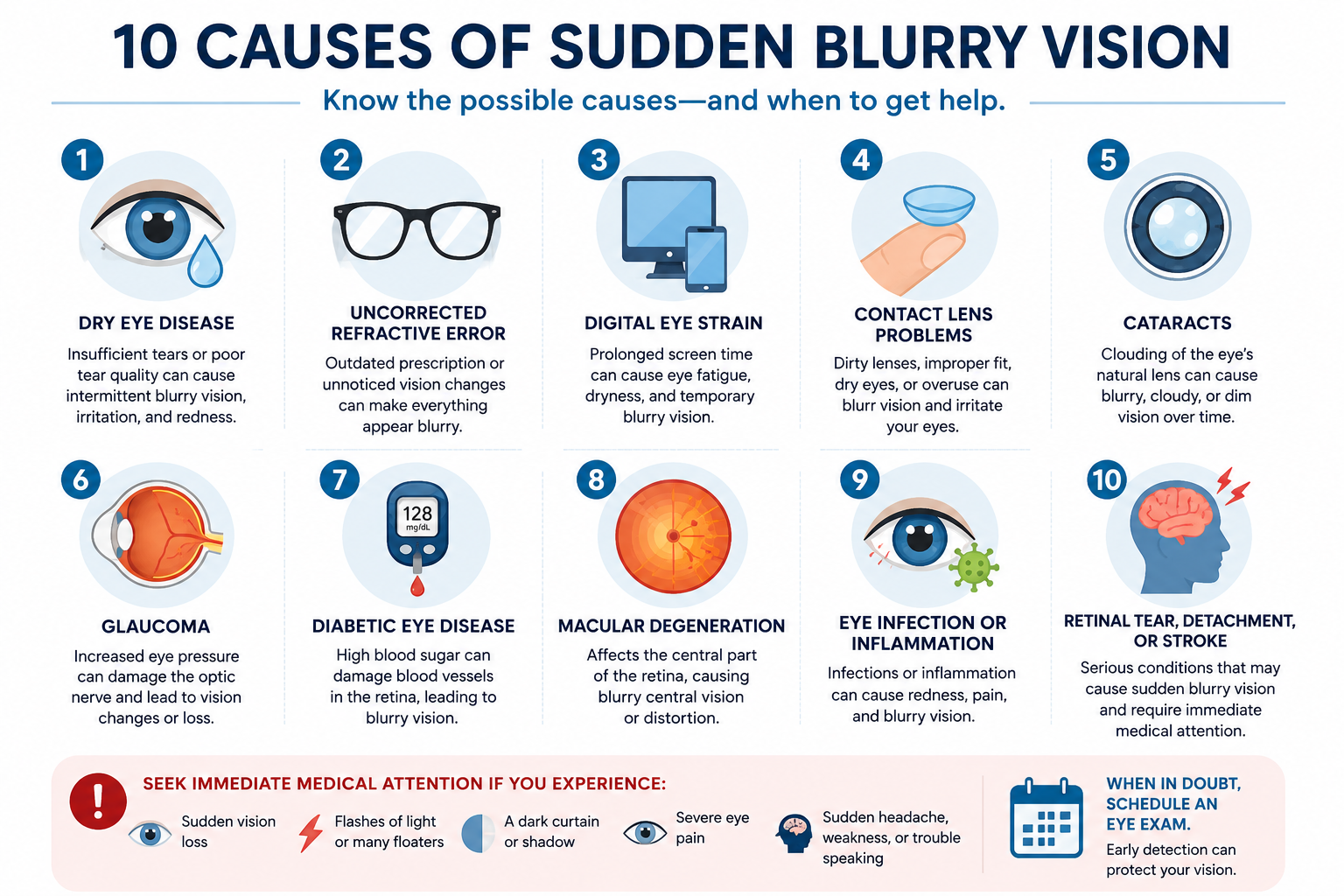
1. Dry Eye Syndrome
One of the most common causes of intermittent blurry vision is dry eye disease.
When your tears evaporate too quickly or aren't produced in sufficient quantity, the surface of the eye becomes uneven, causing vision to fluctuate.
Other symptoms may include:
Burning
Stinging
Scratchy sensation
Excessive tearing
Blurred vision that improves after blinking
Dry eye symptoms often worsen after prolonged computer use, reading, or spending time in air-conditioned environments.
2. A Change in Your Glasses Prescription
Sometimes blurry vision simply means your prescription has changed.
Nearsightedness, farsightedness, or astigmatism can gradually worsen, making distant or near objects appear out of focus.
Even if you've never needed glasses before, vision can change with age or due to normal changes in the eye.
A comprehensive eye exam can determine whether updated glasses or contact lenses are needed.
3. Eye Strain
Spending hours looking at computers, phones, or tablets can temporarily blur your vision.
Digital eye strain may also cause:
Headaches
Dry eyes
Neck pain
Difficulty focusing
The symptoms often improve after resting your eyes.
4. High or Fluctuating Blood Sugar
People with diabetes may notice temporary blurry vision when blood sugar levels change significantly.
High blood sugar can cause the eye's natural lens to swell, temporarily affecting focus. Over time, diabetes can also damage the retina, leading to diabetic retinopathy or diabetic macular edema, which may cause more persistent vision changes.
If you have diabetes and develop new blurry vision, schedule a prompt eye examination.
5. Cataracts
Although cataracts usually develop gradually, some people suddenly notice their vision becoming blurrier as the clouding reaches a noticeable point.
Common symptoms include:
Cloudy vision
Glare around lights
Difficulty driving at night
Faded colors
Cataracts are common with aging and can usually be treated with surgery when they significantly interfere with daily activities.
6. Migraine With Visual Symptoms
Some migraines can temporarily affect vision before or during a headache.
Visual symptoms may include:
Blurry vision
Zigzag lines
Flashing lights
Blind spots
These symptoms typically resolve within an hour, but new or unusual vision changes should always be evaluated to rule out more serious conditions.
7. Eye Infection or Corneal Injury
A scratched cornea, corneal ulcer, or eye infection can cause blurry vision, along with:
Pain
Redness
Light sensitivity
Tearing
Discharge
Contact lens wearers are at higher risk for serious corneal infections.
If you wear contact lenses and develop significant redness, pain, discharge, light sensitivity, or reduced vision, remove your lenses immediately and seek prompt professional evaluation.
8. Retinal Detachment
A retinal detachment is a medical emergency.
Early warning signs include:
A sudden increase in floaters
Flashes of light
A curtain or shadow over part of your vision
Sudden blurry or missing vision
Prompt treatment offers the best chance of preserving vision.
Seek immediate same-day emergency eye care if these symptoms occur.
9. Acute Angle-Closure Glaucoma
This uncommon but serious condition occurs when eye pressure rises rapidly.
Symptoms often include:
Severe eye pain
Sudden blurry vision
Halos around lights
Headache
Nausea or vomiting
Without prompt treatment, permanent vision loss can occur.
Seek emergency medical attention immediately.
10. Stroke or Other Neurological Conditions
Not every cause of blurry vision originates in the eye.
A stroke affecting the brain's visual pathways can cause sudden blurry vision, double vision, or vision loss.
Warning signs include:
Weakness or numbness on one side
Facial drooping
Difficulty speaking
Trouble walking
Severe sudden headache
Call 911 immediately if sudden vision changes occur with any neurological symptoms.
When Is Sudden Blurry Vision an Emergency?
Seek immediate emergency eye care if you experience:
Sudden vision loss
A curtain or shadow across your vision
New flashes with many new floaters
Severe eye pain
Chemical exposure
Significant eye trauma
A red, painful eye with nausea or vomiting
Call 911 immediately if blurry vision occurs with:
Facial drooping
Weakness
Confusion
Difficulty speaking
Sudden severe headache
These symptoms may indicate a medical emergency.
How an Optometrist Evaluates Sudden Blurry Vision
During your examination, your optometrist may perform:
Visual acuity testing
Refraction
Eye pressure measurement
Slit lamp examination
Dilated retinal examination
Retinal photography when appropriate
Additional testing or referral may be recommended depending on the findings.
What Can You Safely Do Before Your Appointment?
If your vision becomes blurry:
Stop driving if your vision is unsafe.
Remove contact lenses if they are uncomfortable or your eye is red or painful.
Avoid rubbing your eyes.
Note when the symptoms started and whether one or both eyes are affected.
Seek urgent evaluation if symptoms worsen or are accompanied by warning signs.
Avoid self-diagnosing, as many different conditions can cause similar symptoms.
Radiant Optometry Clinical Perspective
At Radiant Optometry, we commonly evaluate patients who are concerned about sudden vision changes. Sometimes the cause is relatively minor, such as dry eye or an updated glasses prescription. Other times, blurry vision may signal a condition requiring urgent treatment.
A comprehensive eye examination helps determine the cause and whether additional testing or emergency referral is needed.
Conclusion
Sudden blurry vision should never be ignored. While many causes are treatable, some require immediate medical attention to prevent permanent vision loss or identify serious underlying health conditions.
If you've experienced new blurry vision, scheduling a prompt eye examination can help determine the cause and guide appropriate care. For patients in Bellflower and surrounding communities, Radiant Optometry provides comprehensive eye examinations and urgent eye evaluations when appropriate.
Frequently Asked Questions
Can dry eyes cause sudden blurry vision?
Yes. Dry eyes commonly cause fluctuating blurry vision that often improves after blinking or using artificial tears.
Is blurry vision always an emergency?
No. However, sudden blurry vision should always be evaluated promptly because some causes can threaten vision or overall health.
Should I go to the emergency room for sudden blurry vision?
If blurry vision occurs with severe eye pain, flashes, and many new floaters, a curtain over your vision, significant eye injury, or stroke symptoms, seek emergency medical care immediately.
Can high blood sugar make vision blurry?
Yes. Fluctuating blood sugar levels can temporarily change the eye's focusing ability, and diabetes can also lead to retinal disease over time.
Can stress cause blurry vision?
Stress itself is not usually the direct cause, but it may contribute to dry eyes, eye strain, or migraine-related visual symptoms. Persistent or sudden blurry vision should still be evaluated by an eye care professional.
Medical Review Note
This article is for general education and does not replace an examination, diagnosis, or treatment from a qualified healthcare professional.
Sources
- American Academy of Ophthalmology. Blurriness: Symptoms & Causes.
- National Eye Institute. Refractive Errors.
- American Optometric Association. Eye Emergencies.
- National Eye Institute. Diabetic Eye Disease.
- Cleveland Clinic. Blurry Vision.
- Harvard Health Publishing. What Could Be Causing Your Blurry Vision?
Helpful Articles
article_category: products
article_category: psychiatry
article_category: faqs
article_category: cats
article_category: general
article_category: services
article_category: technology
article_category: dogs
article_category: restorative
article_category: vision therapy
article_category: contact lenses
article_category: health
article_category: conditions
article_category: eye surgery co-management
article_category: exotic
article_category: cosmetic
article_category: surgical procedures
article_category: aesthetics
article_category: preventative
article_category: ocular disease management
article_category: eyeglasses
article_category: eye health
article_category: large animal
[]
article_category: psychiatry
article_category: faqs
article_category: cats
article_category: general
article_category: services
article_category: technology
article_category: dogs
article_category: restorative
article_category: vision therapy
article_category: contact lenses
article_category: health
article_category: conditions
article_category: eye surgery co-management
article_category: exotic
article_category: cosmetic
article_category: surgical procedures
article_category: aesthetics
article_category: preventative
article_category: ocular disease management
article_category: eyeglasses
article_category: eye health
article_category: large animal
[]
Flowbite is an open-source library of interactive components built on top of Tailwind CSS including buttons, dropdowns, modals, navbars, and more.
Check out this guide to learn how to get started and start developing websites even faster with components on top of Tailwind CSS.

All Eyecare Services
We offer a wide variety of eye care services to the Bellflower community. Contact us with any questions about our services.

Keep In Touch
For non-urgent questions or to learn more about our services, contact us today!
© 2026 Radiant Optometry. All rights Reserved - Accessibility Statement - Privacy Policy - Sitemap
Managed and Designed by 