
Daily vs Monthly Contacts: Which Is Right for You?
Blog:Daily vs Monthly Contacts: Which Is Right for You?
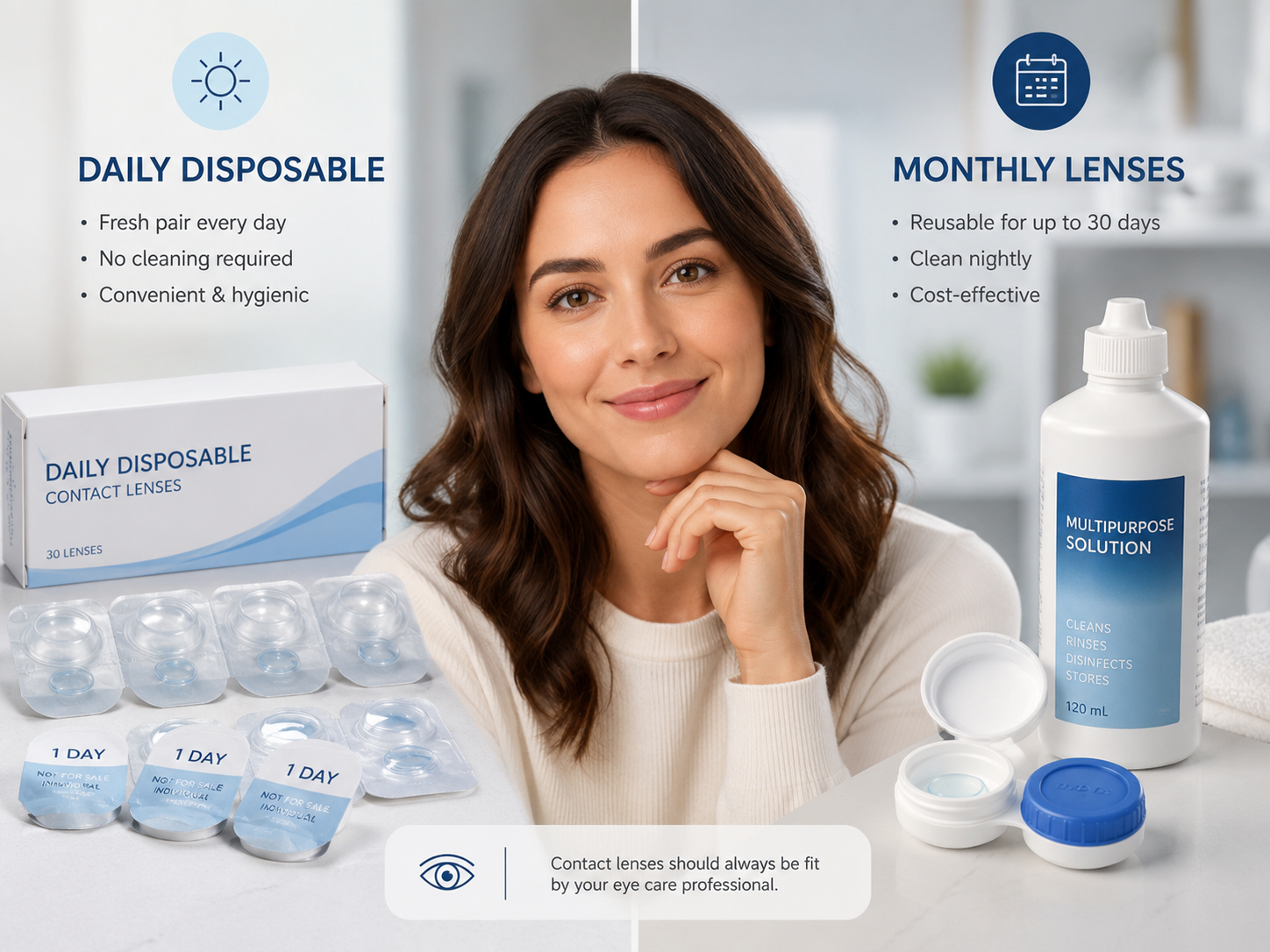
Choosing contact lenses isn't simply about correcting your vision—it's also about finding an option that fits your lifestyle, comfort preferences, eye health, and daily routine.
Many patients ask whether daily disposable contact lenses or monthly contact lenses are the better choice. The answer depends on several factors, including how often you wear contacts, your eye health, and how consistently you follow lens care instructions.
At Radiant Optometry in Bellflower, we help patients determine which contact lenses best match their individual needs during a comprehensive contact lens examination and fitting.
Key Takeaways
Daily contact lenses are worn once and discarded after each use.
Monthly contact lenses are cleaned, disinfected, and reused for up to 30 days as directed.
Daily lenses generally offer greater convenience and reduced risk of lens deposits.
Monthly lenses may be more economical for people who wear contacts every day.
Proper lens hygiene is essential regardless of the replacement schedule.
An eye examination and contact lens fitting are necessary to determine which option is safest and most appropriate for your eyes.
What Are Daily Contact Lenses?
Daily disposable contact lenses are designed to be worn for one day and then thrown away.
Each morning, you open a fresh sterile pair. At the end of the day, you remove and discard them—no cleaning or storage is required.
Benefits of Daily Contacts
Fresh, clean lens every day
No cleaning solutions or storage case needed
Less buildup of proteins, allergens, and debris
Convenient for travel
Lower chance of contamination from improper cleaning
Excellent option for occasional wear
Because a new lens is used each day, many patients find daily disposables feel cleaner and more comfortable throughout the day.
What Are Monthly Contact Lenses?
Monthly contact lenses are reusable lenses that are worn during the day, removed each night, cleaned with contact lens solution, and stored in a clean lens case.
After approximately 30 days (or according to the manufacturer's instructions), the lenses are discarded and replaced with a new pair.
Benefits of Monthly Contacts
Lower cost per lens
Good choice for daily wearers
Available in many prescriptions
Some specialty lens designs are only available as reusable lenses
Monthly lenses require careful cleaning and storage every day to help reduce the risk of eye infections and other complications.
Daily vs Monthly Contacts: Side-by-Side Comparison
Feature | Daily Contacts | Monthly Contacts |
Replacement | Every day | Every 30 days (or as prescribed) |
Cleaning Required | No | Yes |
Storage Case | Not needed | Required |
Comfort | Often very comfortable due to fresh lens each day | Can remain comfortable with proper care |
Convenience | Excellent | Moderate |
Protein & Debris Buildup | Minimal | More likely over time |
Upfront Cost | Usually higher | Usually lower |
Best For | Busy lifestyles, occasional wear, allergies | Regular daily wear with consistent lens care |
Which Contact Lenses Are More Comfortable?
Comfort varies from person to person.
Many patients report that daily disposable lenses feel fresher because they begin each day with a brand-new lens that has not accumulated deposits from previous wear.
However, modern monthly lenses are manufactured using advanced materials that can also provide excellent comfort when cleaned and replaced as directed.
Dry eye, allergies, screen time, and the fit of the contact lens can all affect comfort.
If your contacts become uncomfortable, an examination can help determine whether the issue is related to the lens material, fit, prescription, tear film, or another eye condition.
Which Option Is Better for Eye Health?
No contact lens completely eliminates the risk of complications. Safe wear depends on using lenses exactly as prescribed and maintaining good hygiene.
Daily disposable lenses may reduce exposure to deposits and contamination because a fresh lens is used each day. Studies have found that reusable lenses can accumulate microorganisms and deposits over time if not cleaned properly. Proper hygiene remains essential regardless of lens type.
Important healthy habits include:
Wash and dry your hands before handling lenses.
Never sleep in lenses unless specifically approved by your eye care provider and the lens is FDA-approved for overnight wear.
Never rinse or store lenses in tap water.
Replace your lens case regularly if you use reusable lenses.
Follow the recommended replacement schedule even if the lenses still feel comfortable.
Which Is More Cost-Effective?
The answer depends on how often you wear contacts.
Daily Contacts May Be Better If You:
Wear contacts only occasionally
Alternate between glasses and contacts
Travel frequently
Prefer minimal maintenance
Have seasonal allergies
Monthly Contacts May Be Better If You:
Wear contacts nearly every day
Are comfortable following a daily cleaning routine
Want to reduce the ongoing cost of lenses
Do not mind using cleaning solution and a storage case
While monthly lenses often have a lower cost per day for full-time wearers, the total cost should also include contact lens solution and replacement cases.
Are Daily Contacts Better for Allergies?
For some patients, yes.
Seasonal pollen, dust, and other allergens can collect on reusable contact lenses during wear. Because daily disposable lenses are discarded after each use, patients with eye allergies sometimes find them more comfortable during allergy seasons.
However, allergy symptoms have many possible causes. An eye examination can help determine whether your discomfort is related to allergies, dry eye disease, contact lens deposits, or another condition.
Who Should Consider Daily Contact Lenses?
Daily disposable lenses may be a good option for people who:
Have busy schedules
Wear contacts only occasionally
Travel frequently
Have mild allergies
Prefer the simplest lens routine
Want to avoid cleaning and storing lenses
Who Might Prefer Monthly Contact Lenses?
Monthly lenses may be appropriate for patients who:
Wear contacts nearly every day
Consistently follow cleaning instructions
Have prescriptions available in monthly lens designs
Prefer reusable lenses
May benefit from specialty reusable lens options
The best choice depends on your prescription, eye health, tear quality, and lifestyle.
Warning Signs You Shouldn't Ignore
Stop wearing your contact lenses and seek prompt professional evaluation if you experience:
Significant eye pain
Increasing redness
Light sensitivity
Thick eye discharge
Blurred or reduced vision
A contact lens that suddenly becomes very uncomfortable and remains painful after removal
Contact lens wearers who develop pain, redness, discharge, light sensitivity, or decreased vision should remove their lenses immediately and seek prompt professional evaluation. These symptoms can be signs of a serious eye infection, including microbial keratitis, which requires urgent diagnosis and treatment.
Seek immediate same-day emergency eye care if you experience sudden vision loss, severe eye pain, a chemical eye injury, or significant eye trauma.
How an Optometrist Helps You Choose
Choosing contact lenses involves much more than selecting daily or monthly replacements.
During a contact lens examination, your optometrist evaluates:
Your vision prescription
Corneal shape
Tear film quality
Eye surface health
Lifestyle needs
Previous contact lens experience
Comfort and lens fit
A properly fitted contact lens helps maximize comfort, vision, and eye health while reducing the risk of complications.
At Radiant Optometry, we commonly evaluate patients who are unsure whether daily or monthly contact lenses are the better fit for their needs. The recommendation is based on a thorough eye examination, your prescription, and how you plan to wear your lenses—not simply on convenience or cost.
Frequently Asked Questions
Are daily contacts safer than monthly contacts?
Daily disposable lenses may reduce the opportunity for deposit buildup and contamination because a fresh sterile lens is used each day. However, both types can be safe when worn and cared for exactly as directed.
Can I wear monthly contacts longer than 30 days?
No. Monthly lenses should be replaced according to the manufacturer's recommended schedule, even if they still feel comfortable.
Can I reuse daily disposable contact lenses?
No. Daily disposable lenses are designed for a single day's use and should not be cleaned or reused.
Are daily contacts worth the extra cost?
Many patients value the convenience, hygiene, and comfort of daily disposables. Whether they are worth the additional expense depends on your wearing habits, lifestyle, and personal preferences.
Can I switch from monthly to daily contacts?
Possibly. An updated contact lens examination and fitting can determine whether daily disposable lenses are available and appropriate for your prescription and eye health.
Conclusion
When comparing daily vs monthly contacts, there isn't a single option that's best for everyone. Daily disposable lenses offer outstanding convenience and eliminate the need for cleaning, while monthly lenses can be an excellent choice for many full-time wearers who consistently follow proper lens care practices.
The safest and most comfortable contact lenses are the ones that fit your eyes properly, match your prescription, and are worn according to your eye care provider's recommendations.
If you're considering switching contact lenses or trying contacts for the first time, schedule a contact lens examination at Radiant Optometry in Bellflower. A personalized fitting can help determine which lens type best supports your vision, comfort, and long-term eye health.
This article is for general education and does not replace an examination, diagnosis, or treatment from a qualified healthcare professional.
Sources
- American Academy of Ophthalmology. Contact Lenses. https://www.aao.org/eye-health/glasses-contacts/contact-lenses
- American Optometric Association. Contact Lens Care. https://www.aoa.org/healthy-eyes/caring-for-your-eyes/contact-lenses
- Centers for Disease Control and Prevention. Healthy Contact Lens Wear and Care. https://www.cdc.gov/contactlenses/
- National Eye Institute. Keep Your Eyes Healthy. https://www.nei.nih.gov/
- U.S. Food and Drug Administration. Contact Lenses. https://www.fda.gov/medical-devices/contact-lenses
Helpful Articles
article_category: products
article_category: psychiatry
article_category: faqs
article_category: cats
article_category: general
article_category: services
article_category: technology
article_category: dogs
article_category: restorative
article_category: vision therapy
article_category: contact lenses
article_category: health
article_category: conditions
article_category: eye surgery co-management
article_category: exotic
article_category: cosmetic
article_category: surgical procedures
article_category: aesthetics
article_category: preventative
article_category: ocular disease management
article_category: eyeglasses
article_category: eye health
article_category: large animal
[]
article_category: psychiatry
article_category: faqs
article_category: cats
article_category: general
article_category: services
article_category: technology
article_category: dogs
article_category: restorative
article_category: vision therapy
article_category: contact lenses
article_category: health
article_category: conditions
article_category: eye surgery co-management
article_category: exotic
article_category: cosmetic
article_category: surgical procedures
article_category: aesthetics
article_category: preventative
article_category: ocular disease management
article_category: eyeglasses
article_category: eye health
article_category: large animal
[]
Flowbite is an open-source library of interactive components built on top of Tailwind CSS including buttons, dropdowns, modals, navbars, and more.
Check out this guide to learn how to get started and start developing websites even faster with components on top of Tailwind CSS.

All Eyecare Services
We offer a wide variety of eye care services to the Bellflower community. Contact us with any questions about our services.

Keep In Touch
For non-urgent questions or to learn more about our services, contact us today!
© 2026 Radiant Optometry. All rights Reserved - Accessibility Statement - Privacy Policy - Sitemap
Managed and Designed by 