
Can You Sleep in Contact Lenses?
Blog:Can You Sleep in Contact Lenses?
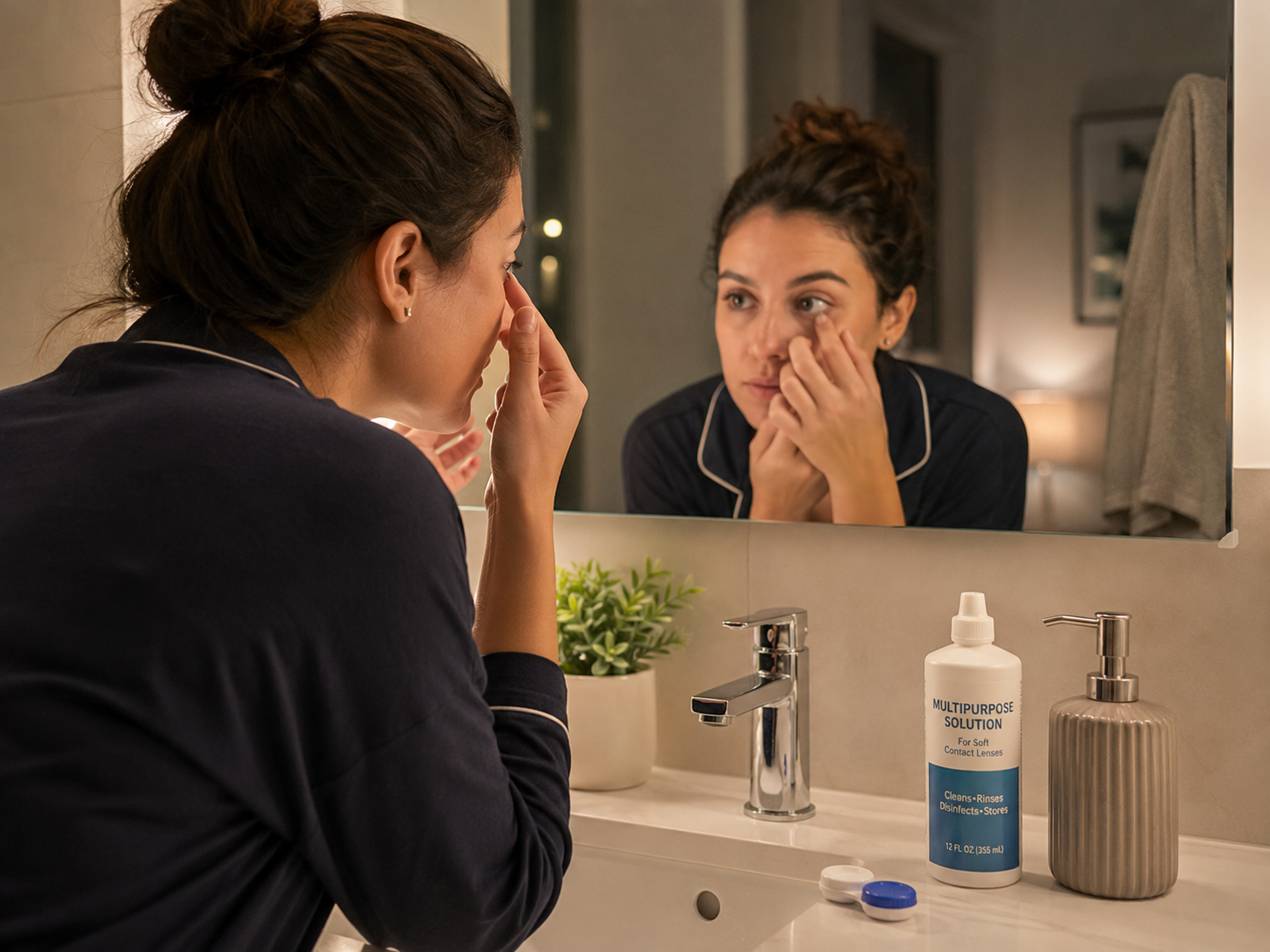
Can You Sleep in Contact Lenses?
In most cases, you should not sleep or nap in contact lenses. Sleeping in contacts increases the risk of corneal infection, irritation, inflammation, and other complications. The Centers for Disease Control and Prevention advises avoiding sleep in contact lenses unless an eye care provider has specifically directed you to wear that particular lens overnight.
Even lenses cleared for extended or overnight wear are not risk-free. Sleeping in contact lenses—whether accidentally, occasionally, or according to an extended-wear schedule—has been associated with a six- to eightfold increase in the risk of contact-lens-related eye infections.
Key takeaways
Remove daily-wear contact lenses before every nap and bedtime.
Do not assume a lens is safe for sleep because it feels comfortable or allows high oxygen transmission.
Overnight wear increases the risk of microbial keratitis, a potentially serious infection of the cornea.
After accidentally sleeping in contacts, remove them carefully and monitor your eyes.
Eye pain, worsening redness, light sensitivity, discharge, or reduced vision requires prompt professional evaluation.
Some specialty lenses, including prescribed overnight orthokeratology lenses, are intentionally worn during sleep but require professional fitting and close follow-up.
Why is sleeping in contact lenses risky?
The cornea is the clear, dome-shaped surface at the front of the eye. Unlike most tissues, it does not contain blood vessels. It receives much of its oxygen directly from the air through the tear film.
A contact lens creates an additional barrier between the cornea and the surrounding air. Modern lenses may transmit more oxygen than older materials, but oxygen delivery still decreases when the eyelids remain closed during sleep.
Overnight lens wear can also interfere with the eye’s normal surface defenses. A lens may trap microorganisms and debris against the cornea, while reduced blinking limits the movement of fresh tears across the eye. Small areas of surface disruption can make it easier for microorganisms to enter the cornea.
These conditions can contribute to:
Corneal swelling
Dryness and irritation
Contact-lens-induced inflammation
Corneal abrasions
Corneal ulcers
Microbial keratitis
A corneal ulcer is an open sore on the cornea, often caused by infection. It can progress quickly and may cause scarring or permanent vision loss without timely treatment. FDA materials warn that eye problems related to contact lenses can develop rapidly and may lead to serious injury or loss of vision.
What is microbial keratitis?
Microbial keratitis is an infection of the cornea caused by bacteria, fungi, parasites, or other microorganisms. Bacterial keratitis is a particular concern among contact-lens wearers.
Possible symptoms include:
Moderate or severe eye pain
Increasing redness
Light sensitivity
Excessive tearing
Discharge
Blurred or reduced vision
A white or cloudy spot on the cornea
A feeling that something is stuck in the eye
These symptoms should not be assumed to be simple dryness. An eye examination is needed to determine whether the problem is irritation, inflammation, an abrasion, or an infection.
What if the package says the contacts are approved for overnight wear?
A limited number of contact lenses are cleared for extended wear. Depending on the specific lens and prescription, this may permit overnight use for a certain number of nights.
However, “approved for overnight wear” does not mean “free of risk.” FDA documentation for extended-wear lenses notes that corneal-ulcer risk is greater with extended wear than with daily wear.
Do not begin sleeping in contacts simply because the product is marketed as breathable or extended wear. The lens must be appropriate for your eyes, professionally fitted, and worn according to the schedule prescribed by your optometrist.
Your eye doctor may consider factors such as:
Corneal health
Tear-film quality
Prescription
Lens fit and movement
Previous infections or inflammation
Work and sleep schedule
Ability to follow lens-care instructions
For many patients, removing lenses before sleep remains the safer routine.
Are naps in contact lenses safe?
A short nap still counts as sleeping in contact lenses. The eyelids are closed, oxygen reaching the cornea decreases, and the lens remains against the eye without normal blinking or tear exchange.
Falling asleep for 20 minutes may carry less exposure than wearing contacts overnight, but it is not considered risk-free. The CDC’s reported increase in infection risk includes people who sleep or nap in their lenses.
Remove your lenses before a planned nap. Keeping glasses and a clean contact-lens case nearby can make this easier.
I accidentally slept in my contacts. What should I do?
Do not panic, but do not ignore new symptoms.
1. Wash and dry your hands
Use soap and water, then dry your hands completely with a clean, lint-free towel before touching your eyes or lenses.
2. Check whether the lenses move comfortably
After overnight wear, a lens may feel dry or temporarily stuck. Do not forcefully pull it from the eye.
Blink several times. If your eye care provider has previously said that preservative-free lubricating eye drops are appropriate for you, they may help moisten the lens. Do not put tap water, saliva, or homemade solutions in your eye or on the lens.
3. Remove the lenses carefully
Once the lenses move normally and can be removed without force, take them out. If they are daily disposable lenses, discard them.
Reusable lenses should be handled according to the care system prescribed for that lens. Never “top off” old solution with new solution, and never use water to rinse or store contacts.
4. Give your eyes a break
Wear glasses rather than reinserting contact lenses immediately. Mild dryness or temporary irritation may improve after lens removal, but persistent or worsening symptoms need evaluation.
5. Monitor for warning signs
Contact an optometrist promptly if discomfort, redness, tearing, or blurred vision does not settle after the lenses are removed.
When should you seek urgent care?
Remove your contact lenses and seek a prompt same-day professional eye evaluation for:
Significant or worsening eye pain
Increasing redness
Light sensitivity
Discharge
Reduced or blurry vision
A white or cloudy area on the cornea
Symptoms that continue after lens removal
Difficulty removing a lens
A red eye that is getting worse rather than better
Contact-lens wearers with pain, redness, discharge, light sensitivity, or reduced vision should not reinsert their lenses until they have been professionally evaluated and told it is safe.
Seek immediate same-day emergency eye care for sudden vision loss, a chemical injury, penetrating trauma, or severe eye pain after significant injury. Chemical exposure should be rinsed immediately with plenty of clean, lukewarm water while emergency help is arranged.
Call 911 or seek emergency medical care now for sudden vision changes accompanied by facial drooping, weakness, confusion, difficulty speaking, or a severe sudden headache, as these can be warning signs of a neurological emergency.
Are there contacts that are supposed to be worn during sleep?
Yes. Orthokeratology, often called ortho-k, uses specially designed rigid contact lenses that are generally worn while sleeping and removed after waking. They temporarily reshape the front surface of the eye to correct vision during the day. Certain ortho-k designs are also used as part of myopia-management programs.
Ortho-k lenses are different from ordinary daily-wear soft contacts. They require:
A complete eye and corneal evaluation
Specialized measurements and fitting
Detailed cleaning and disinfection
Regular follow-up examinations
Careful monitoring of corneal health
The FDA notes that overnight ortho-k lenses are prescribed for sleep according to a professionally determined schedule.
Patients should never borrow ortho-k lenses, order them without proper professional care, or treat them like standard soft lenses.
How can you avoid accidentally sleeping in contacts?
A consistent routine can reduce accidental overnight wear:
Remove contacts before you become very tired.
Set a nightly reminder on your phone.
Keep backup glasses accessible.
Carry a clean case and the correct solution when away from home.
Avoid lying down “for a minute” while wearing contacts.
Follow the replacement schedule prescribed for your lenses.
Attend recommended contact-lens follow-up visits.
Contact lenses are prescription medical devices, not interchangeable accessories. A proper contact-lens examination evaluates more than vision—it also checks lens fit, corneal response, comfort, tear quality, and whether the wearing schedule remains appropriate.
A clinical perspective from Radiant Optometry
At Radiant Optometry, a pattern we commonly evaluate is a red or uncomfortable eye after a patient has worn contacts longer than intended or fallen asleep in them. Similar symptoms can come from dryness, a tight lens, inflammation, an abrasion, or an infection. Because these conditions can look alike to the patient, an examination is needed to identify the cause.
Dr. Loi Mai, OD, can evaluate the cornea, eyelids, tear film, lens fit, and other eye structures. Depending on the symptoms, an examination may include magnified slit-lamp evaluation and diagnostic dyes that reveal areas of corneal surface damage.
Treatment depends on the underlying diagnosis. It may involve a temporary break from contact lenses, changes to lens material or fit, adjustments to the wearing schedule, or medical treatment when clinically indicated. Patients should not use someone else’s eye drops or leftover prescription medication.
The bottom line
For most contact-lens wearers, the safest answer to “Can you sleep in contact lenses?” is no. Remove your contacts before naps and bedtime unless an eye care professional has specifically prescribed an overnight-wear lens and schedule.
Accidentally sleeping in contacts does not automatically mean that an infection has developed. However, remove the lenses carefully, wear glasses, and watch for pain, redness, light sensitivity, discharge, or reduced vision.
Radiant Optometry provides contact-lens examinations, fittings, and urgent eye evaluations in Bellflower, California. Schedule an examination if your contacts frequently feel dry or uncomfortable, you are unsure whether your lenses are approved for overnight wear, or symptoms develop after sleeping in them.
FAQs
Can sleeping in contacts once damage your eyes?
One episode does not necessarily cause permanent damage, but even occasional overnight wear raises infection risk. Remove the lenses carefully, avoid reinserting them while your eyes are irritated, and seek prompt care for pain, redness, light sensitivity, discharge, or blurred vision.
How long should I leave my contacts out after sleeping in them?
There is no single safe waiting period for everyone. Keep the lenses out until your eyes feel and look normal. Persistent symptoms require an examination rather than simply waiting longer. Do not reinsert contacts if you have significant redness, pain, light sensitivity, discharge, or reduced vision.
Can I sleep in daily disposable contacts?
No. “Daily disposable” means the lenses are worn during the day and discarded after removal. It does not mean that they are designed for a full day and night of continuous use. FDA guidance advises against sleeping in daily-wear lenses because doing so may increase infection and irritation.
Can I sleep in silicone hydrogel contacts?
Only when that exact lens has been prescribed for overnight wear by your eye care provider. High oxygen transmission does not remove the infection risk associated with sleeping in contact lenses.
What should I do when a contact feels stuck after sleeping?
Wash and dry your hands, blink several times, and allow the lens to rehydrate. Do not force it off and do not use tap water or saliva. Seek professional help if the lens will not move or if removal causes pain.
Why is my vision blurry after sleeping in contacts?
Possible causes include a dry lens surface, corneal swelling, irritation, an abrasion, inflammation, or infection. Remove the lenses and wear glasses. An examination is needed if the blurriness persists, worsens, or occurs with pain, redness, discharge, or light sensitivity.
This article is for general education and does not replace an examination, diagnosis, or treatment from a qualified healthcare professional.
Sources
Centers for Disease Control and Prevention. Preventing Eye Infections When Wearing Contacts. Updated May 27, 2025.
Centers for Disease Control and Prevention. Corneal Infections Associated with Sleeping in Contact Lenses—Six Cases, United States, 2016–2018. Morbidity and Mortality Weekly Report.
U.S. Food and Drug Administration. Everyday Eye Care—Contact Lenses.
U.S. Food and Drug Administration. Types of Contact Lenses.
U.S. Food and Drug Administration. What to Know if Your Child Wants Contact Lenses.
American Academy of Ophthalmology. Why You Should Never Sleep in Your Contact Lenses.
American Academy of Ophthalmology. Eye Infections From Contact Lenses. Updated June 25, 2026.
Helpful Articles
article_category: products
article_category: psychiatry
article_category: faqs
article_category: cats
article_category: general
article_category: services
article_category: technology
article_category: dogs
article_category: restorative
article_category: vision therapy
article_category: contact lenses
article_category: health
article_category: conditions
article_category: eye surgery co-management
article_category: exotic
article_category: cosmetic
article_category: surgical procedures
article_category: aesthetics
article_category: preventative
article_category: ocular disease management
article_category: eyeglasses
article_category: eye health
article_category: large animal
[]
article_category: psychiatry
article_category: faqs
article_category: cats
article_category: general
article_category: services
article_category: technology
article_category: dogs
article_category: restorative
article_category: vision therapy
article_category: contact lenses
article_category: health
article_category: conditions
article_category: eye surgery co-management
article_category: exotic
article_category: cosmetic
article_category: surgical procedures
article_category: aesthetics
article_category: preventative
article_category: ocular disease management
article_category: eyeglasses
article_category: eye health
article_category: large animal
[]
Flowbite is an open-source library of interactive components built on top of Tailwind CSS including buttons, dropdowns, modals, navbars, and more.
Check out this guide to learn how to get started and start developing websites even faster with components on top of Tailwind CSS.

All Eyecare Services
We offer a wide variety of eye care services to the Bellflower community. Contact us with any questions about our services.

Keep In Touch
For non-urgent questions or to learn more about our services, contact us today!
© 2026 Radiant Optometry. All rights Reserved - Accessibility Statement - Privacy Policy - Sitemap
Managed and Designed by 